/master-professional-career-coach
/programs
/senior-professional-career-coach
/senior-professional-resilience-coach
/senior-professional-resume-writer
Speak with a Learning Advisor
Book a certification consultation with a learning advisor to help you find the perfect certification path

How to Quit Your Job: The Complete Guide to Escaping the 9-5

If you're thinking about quitting your job, you're already dreaming of something better.
Whether you want a different job, a career change, or you’re thinking about working for yourself, this guide walks through the practical and emotional side of leaving a job without blowing up your finances, reputation, or future opportunities. You'll find everything you need to evaluate whether quitting is the right move, prepare financially and professionally, navigate the resignation process, and land in a career that was meant just for you.
Escaping the 9-5 starts before you resign
I’ve spent 20 years in leadership, working closely with department leaders and employees at every level. During that time, I’ve seen people resign professionally, respectfully, and with their dignity intact. I’ve also seen the exact opposite.
Over the years, I’ve talked with thousands of job seekers who desperately want to quit their jobs or have already quit and are trying to figure out what to do next. And there’s one thing I hear over and over again: they wish they had the courage to quit, or that they had quit sooner.
That says a lot about how fear can keep people stuck. I've heard many reasons why people only dream about quitting and never do it. Can I afford not to work for a bit? What will I tell people why I've left? Can I really get a better job? What if the next job is worse? What if it is my fault that I hate my job?
There are plenty of what-abouts and what-ifs. But there’s a big difference between quitting impulsively and thoughtfully evaluating your situation, planning your exit, and mapping out your next strategic steps. Quitting thoughtfully takes more emotional energy than people realize.
A lot of people already know they want out, but few take thoughtful action. According to Gallup’s 2026 State of the Global Workplace Report, more than half of U.S. employees were either actively looking for a new job or watching for new opportunities. At the same time, about 30% said they felt “stuck” in their current jobs as employee engagement continues to hit decade lows and the job market remains uncertain. Learn more in my May 2026 State of the Job Market Report.
Quitting is the easy part. But, leaving in a way that doesn’t create financial, professional, or emotional chaos is much trickier.
In her book Quitting: A Life Strategy, author Julia Keller says that of the 150 people she interviewed, only two or three regretted something they quit. “Almost always, the regret came from not quitting something sooner and allowing unhealthy situations to drag on and get worse.”
Signs You Should Quit Your Job
If several of these signs feel familiar, it may be time to seriously evaluate whether your current job is still the right fit.
- You dread going to work every day.
- Your manager is making your life miserable.
- Your workplace feels toxic or unhealthy.
- You’re burned out, exhausted, or emotionally drained.
- There are no real opportunities for growth or advancement.
- Your work-life balance is hurting your health or relationships.
- You feel underpaid, undervalued, or stuck.
- The company’s future feels unstable or uncertain.
- Your values no longer align with the company culture.
- You keep thinking about quitting, but are too afraid to act.
How to Know When It’s Time to Quit Your Job
Knowing when to quit your job is rarely a single dramatic moment. More often, it's a series of signs like these that you’ve probably ignored for too long.
- You dread going to work: If your work stress starts before your workday even begins, pay attention. When you’re lying awake at night replaying conversations, dreading meetings, or mentally preparing yourself for another exhausting day, it’s often a sign of extreme stress. If you find yourself avoiding work and colleagues altogether, two words come to mind: cut bait.
- Your manager makes your life miserable: There's a reason the saying "people don't quit jobs, they quit managers" has been around for decades. A bad manager can make even a good job feel unbearable. Micromanaging, constant criticism, favoritism, unrealistic expectations, and taking credit for your work. The data tells us that over time, this will make you want to leave. Gallup's 2025 State of the Workplace Report found that 27% of employees cite leadership as a top reason for job dissatisfaction, and the LinkedIn 2024 Workforce Confidence survey found that 70% of U.S. workers would leave over a bad manager.
- Your workplace is toxic: You spend a huge portion of your life at work, and a toxic work environment is not worth the toll it takes. Constant gossip, favoritism, political games, and impossible workloads wear people down over time. Sometimes gradually enough that they don’t even realize how unhappy they’ve become. The U.S. Department of Health and Human Services warns in its Framework for Workplace Mental Health and Well-Being that "chronic stress from workplace abuse can lead to depression, heart disease, cancer, and other illnesses." No job is worth that.
- There are no (real) opportunities for growth: If you’ve been stuck in the same position for years while watching others move ahead, there may be a serious misalignment. Especially if you’ve been actively learning new skills, improving your performance, taking initiative, and clearly demonstrating your value. Good companies invest in people who grow. If your growth is consistently overlooked despite your efforts, recognition and advancement are likely not coming.
- The company’s future feels unstable: Every company has ups and downs. But repeated layoffs, constant restructuring, leadership turnover, declining morale, shrinking budgets, and tanking stock prices can be signs of deeper instability. If you’re on your sixth boss in five years and leadership isn’t communicating clearly, trust your instincts.
- You’re underpaid: Unfortunately, even after the greatest interview process, one often doesn’t realize compensation is misaligned until they’re deep into the role. If you’ve done your research, benchmarked your role appropriately, and raised the issue professionally with no meaningful response, it’s completely reasonable to move on.
- You’re undervalued: If your contributions are consistently ignored or overlooked, your manager doesn’t support your growth or advocate for you, and you feel unseen, underappreciated, or lacking basic respect and acknowledgment, you are likely wasting your time.
- Your values and the company’s don’t align: Maybe it happened slowly, or you were slow to realize, but the company culture, leadership decisions, and/or business practices are way out of line. No company is worth sacrificing your integrity or exposing yourself to legal or ethical risk.
- You’re not set up for success: Sometimes the problem isn’t employee initiative. It’s that employers push people beyond reasonable expectations for too long. When you’re set up to fail, no matter how hard you work, frustration and burnout usually follow.
- You need better work-life balance: If your job consistently eats into your personal life and affects your physical and mental health, something has to give. While every demanding job has busy periods, if you and your employer can’t find a workable balance, you won’t be successful at work or at home.
- You’re burned out: And you're far from alone. DHR Global’s 2026 Workforce Trends Report found that 83% of workers report some degree of burnout, driven by overwhelming workloads, the rapid adoption of AI layered on top of existing stress, and the increasingly blurry line between work and personal life. At some point, something has to give.
- You want to do something different: Not everyone quits because they hate their job. Sometimes people leave because they want a change, found a new interest, or a change occurred in their life that they need to accommodate.
- Not sure the reason? Fill out the IACC Career Coach Find A Coach form to find a certified IACC career coach to help you identify areas of job dissatisfaction related to your role, industry, work environment, or current career direction. They can also help identify your strengths, interests, and set career goals while guiding you toward a path that better aligns with your long-term goals.
How to Get the Courage to Quit Your Job
Uncertainty is one of the biggest reasons people stay in jobs that are no longer right for them. The paycheck feels safe. Fear of the unknown can hold some back. Remember that staying in a job that slowly chips away at your confidence and self-worth is painful. As Brené Brown says, “You can choose courage, or you can choose comfort. You cannot have both.”
Here are some tips to help you build the confidence to take the courage to quit your job:
- Get honest about the real cost of staying. Not just financially, but emotionally, physically, and professionally. Staying stuck has a price, too.
- Talk to people who have made similar moves. Seek real stories from people who quit and thrived for a powerful confidence-builder. Enjoy reading 16 Successful People Who Quit Everything to Start Over and Succeed.
- Start preparing before you feel ready. Updating your resume, reconnecting with your network, or taking one online course can create momentum that gradually makes the decision feel less terrifying.
- Work with a career coach. A good coach helps you cut through the fear and get clear on what you actually want and what it will realistically take to get there.
Most people don’t suddenly wake up feeling brave enough to quit. Usually, confidence builds after you start taking small steps.
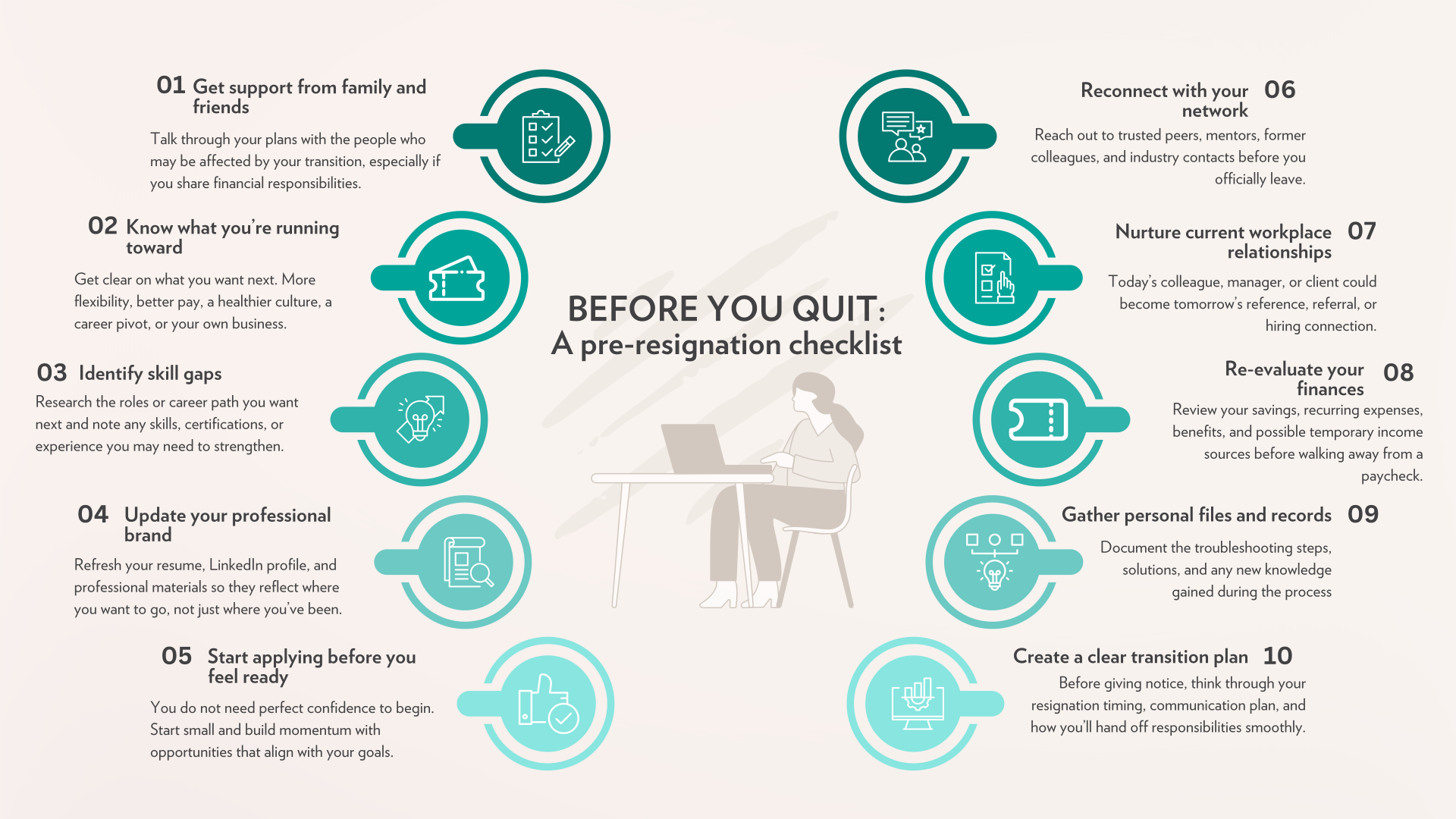
How to Prepare to Quit Your Job: A Pre-Resignation Checklist
Leaving a job can feel terrifying, even when you know deep down it’s the right move. Second-guessing yourself is completely normal. But staying somewhere that’s depleting your ambition can wear you down faster than you realize.
That’s why it’s important for you to work through this checklist. The more thoughtfully you prepare, financially, emotionally, and professionally, the more confident and empowered you’ll feel when it’s finally time to move on.
- Get support from family and friends: Quitting a job affects more than just your career. It can impact your finances, relationships, routines, confidence, and stress levels, especially if you don’t already have another opportunity lined up. Make sure your partner and anyone you share financial obligations with is fully informed of your plans and your strategy for what comes next. You’ll also want close family and friends aware, so they can support you through the uncertainty of a career transition.
- Know what you’re running toward: You already know what you don’t want. Now think carefully about what you do want. More flexibility? Better work-life balance? A higher salary? A healthier culture? A career pivot? To start your own business? The clearer you are about your next goal, the easier it becomes to make smart career decisions instead of emotional ones.
- Identify skill gaps: What skills, certifications, or experience do you need to get where you want to go next? Research job postings, take online courses, read books, and look for ways to strengthen areas that may hold you back during your next job search.
- Update your resume, LinkedIn profile, and professional brand: Your resume should not only appeal to humans but also perform well in Applicant Tracking Systems (ATS), the software many companies use to scan resumes before recruiters ever see them. Use clear formatting, relevant keywords, and measurable accomplishments that align with the roles you’re targeting. Most importantly, make sure your professional brand reflects where you want to go next, not just where you’ve been.
- Start applying, don’t be shy: You do not need to feel 100% confident before submitting applications. Start small. Look for opportunities that align with your values, career goals, salary expectations, and lifestyle preferences. Even applying to one or two jobs a week can help build momentum and confidence.
- Reconnect with your professional network: Don’t wait until after you quit to reconnect. Start quietly reaching out to trusted peers, mentors, former colleagues, and industry contacts. Many job opportunities come through relationships and conversations long before they ever appear online.
- Nurture your current workplace relationships: Today’s manager, colleague, or client could become tomorrow’s reference, referral source, or hiring connection, so keep those relationships warm.
- Allow yourself to change your mind: Sometimes preparing to quit creates clarity. You may discover that the real issue was your manager, your role, or your department, not necessarily the entire company. If another opportunity opens internally or your work environment meaningfully improves, it’s okay to reconsider. Think of it as owning your future, not being trapped by a previous decision.
- Re-evaluate your finances before quitting: Look honestly at your financial situation before walking away from a paycheck, especially if you don’t know how long your job search may take. Review recurring expenses versus discretionary spending and identify what you can reduce, pause, or eliminate. Also consider temporary income sources such as freelance work, consulting, or part-time jobs that can help bridge the gap. Research your state’s unemployment insurance rules because voluntarily quitting a job can affect unemployment eligibility; however, exceptions can exist for situations involving unsafe working conditions, harassment, medical issues, relocation, or other qualifying circumstances. Research low-income benefits available in your area.
- Here’s one more for you: gather any personal files, documentation, contacts, or information you may need from your workspace before giving notice. It’s not unusual for companies to immediately restrict access to systems, email, or devices once an employee resigns. That’s why I recommend that my clients make sure they have their personal materials and records in advance, just in case.
Step by Step: How to Quit Your Job Professionally
No matter how frustrated you are, make your exit as professional and positive as possible by following these basic steps to quit your job with integrity. That doesn't mean pretending everything was perfect. It means protecting your reputation, your references, and the legacy you leave behind. Stay gracious, positive, and appreciative through your remaining time, your conversations, and all your communications. People remember how employees leave.
1. Time your resignation thoughtfully: Timing matters more than many people realize. If you’re leading a major client project at a tax firm, quitting the week before April 15 will likely be remembered for all the wrong reasons. At the same time, protect your own interests. If your annual bonus, stock vesting, commission payout, or benefits eligibility is tied to a specific date, understand your company’s policies before giving notice. In some situations, waiting can make a major financial difference. Take the case of a woman I counseled. She wanted to quit her job, but I had her first talk with her pension department, and she learned she was just two years away from receiving full medical insurance. That was worth it to her to suck it up for two more years. In fact, knowing that she would gain a huge, valuable medical benefit made those two years pure bliss. After she put in her time, she quit and started working in the field she really wanted.
2. Coordinate who you will communicate your departure to at work, in your professional network, the sequencing, when, and how: Map out your communications plan. Start with your manager, then your colleagues, team, event mentors, and your entire network. Once you resign to your manager, work with them collaboratively to align on company communications. Here are some considerations of who to include in your communications plan:
- Very close colleagues. When and what will you share?
- Close colleagues. When and what will you share? How might your approach be different with this group?
- Will you send an email? Who will you include? When’s the most appropriate time to send it?
- Will you post on LinkedIn? When and what will it say to the universe?
- When people ask, what will you tell them?
Depending on your relationship with your manager and company culture, discussions about your departure announcement can sometimes be sensitive. Some managers will want certain people to hear the news directly from them. Some will prefer to announce it during a team meeting so everyone hears it at the same time. Some will be fine having the employee share the news themselves, to whoever they wish. Some don’t care.
Avoid making assumptions and align with your manager on communication before setting the gossip tree on fire.
3. Tell your manager first: Whenever possible, resign directly to your manager in person or over a video call. Avoid surprising them through email, Slack, or office gossip. Keep the conversation professional and appreciative. Thank them for the opportunity, avoid unloading frustrations, and focus on making a clean exit. Ask how you can help with the transition by documenting responsibilities, projects, and key contacts. This is also a good time to confirm who should receive your formal resignation email, including HR.
4. Work closely with HR during the exit process: After notifying your manager, HR will typically guide you through the formal off-boarding process. This may include benefits information, final pay details, equipment returns, confidentiality reminders, unused PTO policies, and transition expectations. If the process feels unclear, ask questions. Make sure you understand timelines, responsibilities, and what information is needed before your departure date.
5. Clean up your workspace, computer, and devices properly: Before leaving, remove personal information from your workspace and devices. Transfer personal files, contacts, photos, or non-company documents you’re legally allowed to keep. You may also want copies of non-confidential materials for your future job search, such as performance reviews, project examples, presentations you created, or metrics tied to your accomplishments. Just make sure you’re not violating company policies, confidentiality agreements, or taking proprietary information.
6. Make the transition easy for others: One of the best ways to make a positive impression is to make your absence go unnoticed for the people staying behind. Document your responsibilities, workflows, recurring tasks, project status updates, important contacts, timelines, and helpful tips. If appropriate, offer to help train whoever will absorb your duties after you leave. People may forget your last accomplishment, but they will remember whether you made the transition harder or easier for everyone else.
7. Ask for references and recommendations: If you’re leaving on positive terms, ask your manager or trusted colleagues whether they would feel comfortable serving as references for future opportunities. Confirm their preferred contact information before you leave. You can also ask for LinkedIn recommendations while your work together is still fresh in their minds.
8. Send a thank-you note: A thoughtful thank-you email or handwritten note can leave a lasting positive impression, especially if you had a supportive manager or mentor. Be genuine and specific. Mention meaningful experiences, skills you learned, or moments where their support made a difference in your career. Professional gratitude goes a long way.
9. Be careful how you talk about your old job afterward: After you leave, people will ask why you quit. Future employers definitely will. Prepare a response ahead of time that stays positive, professional, and forward-looking. Even if your experience was difficult, avoid sounding bitter, angry, or overly negative.
Not sure how to talk about how you moved on? Here are some good examples you can use:
- Wanting new growth opportunities
- Looking for a new challenge
- Changing career directions
- Seeking better work-life balance
- Wanting work more aligned with your long-term goals
How to Work for Yourself After Quitting
For those tired of building someone else’s dream and ready to build their own, take a look at these tips to get a jump on things while adjusting to being the big boss.
- Validate your business idea before quitting: One of the biggest mistakes people make is assuming that because they love an idea, other people will automatically pay for it. Before quitting your job, look for signs that there is actual demand for what you want to sell. Talk to potential customers. Research competitors. Test pricing. Pay attention to whether people seem genuinely interested enough to spend money, not just compliment the idea.
- Identify your target audience: Many new business owners struggle because they try to market to everyone. Get specific about who you want to help and what problem you solve for them. The more specific you are about who you help, the easier it becomes to explain what you do and actually find customers.
- Build a financial runway: Businesses often take longer to become profitable than people expect. Before quitting your day job, try to build savings that can help cover your living expenses during slower months or unexpected setbacks. You should also think through healthcare costs, taxes, retirement savings, software, insurance, licensing, equipment, and other business expenses that may suddenly become your responsibility.
- Test your offers before leaving your job: Whenever possible, test your business idea while you’re still employed. Freelance on the side. Take on a few clients. Sell a small version of your service. Launch a pilot program. Offer consulting sessions. This helps you validate demand, build confidence, gain testimonials, refine your pricing, and work through mistakes before your income fully depends on the business succeeding.
- Develop sales and business skills: Many people are excellent at the service they provide, but struggle with the business side of entrepreneurship. Running a successful business usually requires learning how to sell, market yourself, communicate value, manage finances, negotiate, network, and build relationships. No matter how talented you are, people cannot hire you if they do not know you exist or understand the value you provide.
- Understand that entrepreneurship changes your role: When you work for yourself, you’re no longer just doing the work itself. You’re also handling customer service, operations, invoicing, marketing, administration, business development, and problem-solving. Some people love that variety and independence. Others discover they prefer focusing only on the work they were hired to do. It’s important to honestly assess which type of environment energizes you long-term.
- It’s OK to start before things are perfect: Many successful business owners will tell you they never felt completely ready. Confidence often comes from taking action, learning as you go, and adjusting over time. The goal isn’t reckless quitting. It’s preparing as much as you can and eventually trusting yourself enough to go for it.
- Think About Becoming a Career Coach: Career coaching can be a meaningful path for people who want to work for themselves. If you have the heart to help coach and mentor others, you could be a great career coach. Especially if you’ve navigated job changes, career pivots, or difficult job searches and already understand the challenges many people face. Those experiences can make you an empathetic and effective coach. The Senior Professional Career Coach (SPCC) certification provides practical tools, a proven framework, and a recognized credential to help you confidently launch a coaching business. Learn more about the SPCC certification.
What to Do After You Quit
First, take a breath. Before jumping into panic mode, LinkedIn edits, and nonstop applications, give yourself permission to decompress. The first few days after quitting can bring a surprising mix of relief, excitement, anxiety, and exhaustion all at once. A short trip can do more for your nerves than sending 50 resumes from a place of anxiety. That's completely normal. And don’t feel guilty. You deserve the reset.
Just don't drift too long. The first 30 to 90 days after leaving a job can shape your direction, so be intentional about how you use your time by using these tips.
- Create a routine quickly: One of the biggest adjustments after quitting is suddenly losing structure. Without it, days blend together fast. Set regular wake-up times, block time for job searching, networking, and professional development, and build in personal downtime. Starting a blog, working on a creative project, or learning a new skill can all help maintain momentum and confidence while you figure out what's next.
- Manage your energy, not just your time: Burnout doesn't disappear the moment you quit. Many people leave exhausted and expect to feel motivated again quickly, but instead feel drained, anxious, or numb. Rest when you need to, but avoid isolating yourself or falling into paralysis. If you left a toxic environment, give yourself time to process it. Talk to a trusted friend outside your industry, write in a journal, and let yourself decompress before diving back in. Small, consistent actions rebuild confidence faster than waiting until you feel ready.
- Apply to jobs strategically: After quitting, it can be tempting to apply to everything out of panic. Instead, focus on quality over quantity. Target roles that align with your long-term goals, values, salary expectations, strengths, and preferred lifestyle. Tailor your resume and LinkedIn profile toward the direction you actually want to go, not just the easiest escape route.
- Network with purpose: Unemployment and career transitions can become isolating very quickly. Stay connected with supportive friends, mentors, former colleagues, networking groups, and professional communities. Many opportunities come through conversations and relationships, not online applications alone. Staying visible and engaged also helps maintain confidence during periods of uncertainty. Build real relationships, not just contact lists.
- Get your name out there: Finishing a resume update or having a good networking conversation means progress. Submitting applications, attending networking events, taking a course, updating your portfolio, scheduling informational interviews, reaching out to former colleagues, and improving your website or LinkedIn profile are all steps forward.
- If you’re self-employed, focus on your business plan: If you quit to start a business, your early focus should be on developing your business plan, though it doesn’t need to be perfect. The next step is generating revenue and building relationships. Start talking to potential customers immediately. Test offers. Ask for referrals. Build testimonials and case studies. Many successful businesses begin through networking, word of mouth, repeat customers, and small opportunities that gradually grow over time.
- Give yourself permission to be flexible: Some people discover their next move quickly. Others need time to regroup, rethink priorities, or pivot entirely. Leaving a job can be both a career decision and an identity shift. Don’t panic if clarity doesn’t come to you quickly. Career changes are usually messier than people expect. A lot of people end up somewhere completely different than where they originally planned.
- Fill out our IACC Career Coach Find A Coach form to get matched with a certified career coach to help you get unstuck from your job. Advance to the next level or get the support you need to find your dream job. Quitting a job can be one of the most important career decisions you ever make. And having the right support can help you make that decision with clarity and confidence.
FAQs About Quitting
Should I give two weeks’ notice?
- Usually, yes. Two weeks’ notice is still considered professional and helps protect your reputation, references, and future opportunities while giving your employer time to transition your work.
- There are exceptions. Some roles may require more notice, while others may allow for a faster exit depending on your responsibilities and team coverage.
- If your workplace is abusive, unsafe, unethical, or severely affecting your mental health, leaving immediately may be the healthier option.
- Understand that some employers may ask you to leave immediately after resigning, especially in finance, technology, or security-related roles.
Can I quit my job immediately?
- Yes. In most at-will employment situations, employees can legally quit immediately. However, it may affect references, relationships, or rehire eligibility.
What happens if I quit without notice?
- It depends on the employer. Some companies move on quickly, while others may mark you ineligible for rehire or provide weaker references. When possible, giving notice is usually the safer professional choice.
Should I quit my job before finding another one?
- Ideally, no. Most career experts recommend securing another opportunity first, especially in uncertain job markets. However, if your job is seriously affecting your health or well-being, leaving sooner may still be the right decision if you can financially manage it.
Can I quit my job over email?
- You can, but it’s usually better to tell your manager verbally first, either in person or over video. Afterward, send a formal resignation email for documentation purposes.
What should I say when quitting my job?
- Keep it short, professional, and appreciative. A simple approach works best: “I’ve decided to move on to pursue new opportunities and want to provide my two weeks’ notice. I appreciate the experience I’ve had here and want to help make the transition smooth.